Gradient of a line through two points
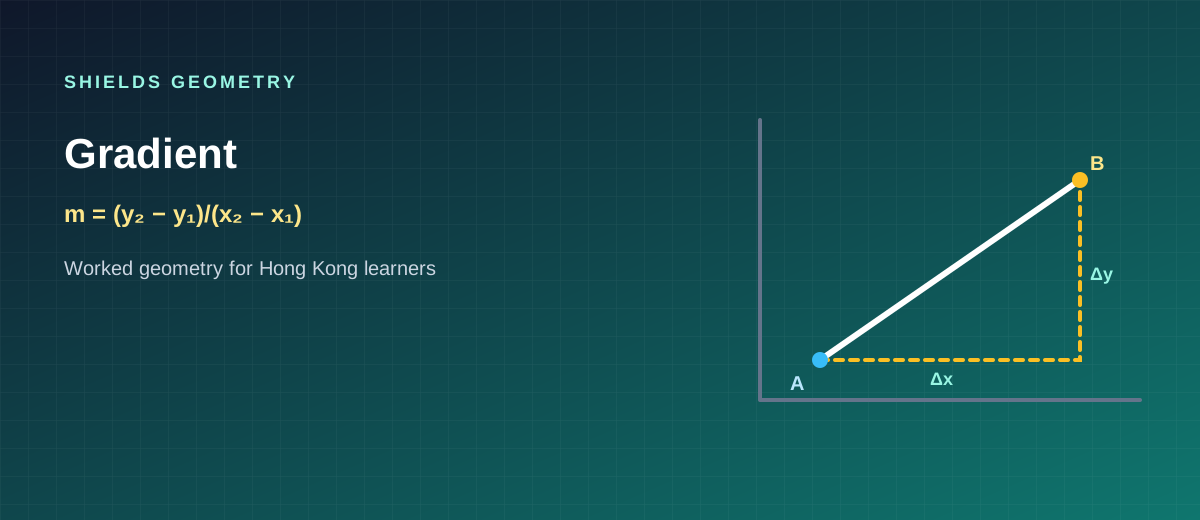
Compute slope carefully with signs, then write the line equation.
Key formulas
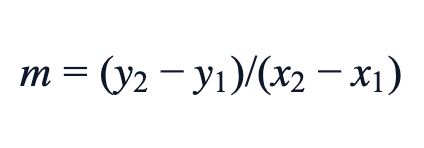
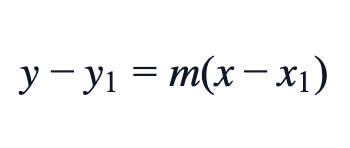
Formula and signs
Gradient m measures rise over run. Keep the same order in numerator and denominator. A negative gradient means the line falls as x increases.
Worked example
Points A(1, 2) and B(5, 10). m = (10 − 2) / (5 − 1) = 8/4 = 2. Using point A: y − 2 = 2(x − 1) → y − 2 = 2x − 2 → y = 2x. Check with B: 2 × 5 = 10, correct.
Vertical and horizontal lines
If x₁ = x₂, the line is vertical and the gradient is undefined; write x = constant. If y₁ = y₂, the line is horizontal and m = 0; write y = constant.
Worked example
Worked example
Problem. Find the gradient of the line through A(2, −1) and B(6, 5).
Solution. m = (y₂ − y₁)/(x₂ − x₁) = (5 − (−1))/(6 − 2) = 6/4 = 3/2. The gradient is 3/2.
Negative gradient
From (2, 7) to (6, 1): m = (1 − 7)/(6 − 2) = (−6)/4 = −3/2.
Review quiz
Gradient through (−1,3) and (3,11) is:
Practice questions
- Find the gradient from (−3, 4) to (1, −2).
- Write the equation of the line through (0, 5) with gradient −1.
Study notes
Does order matter?
You may swap the points, but swap both coordinates the same way.
How do I know a calculation error?
Substitute both given points into the finished equation.