Composite solids: add or subtract volumes
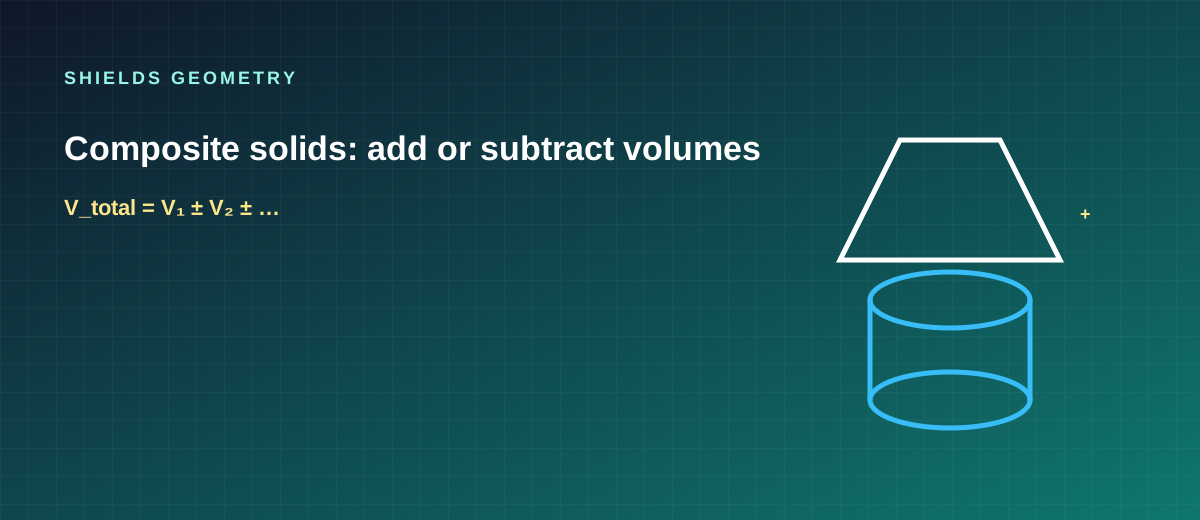
Ice-cream cones, barns and machine parts are usually a sum or difference of standard solids.
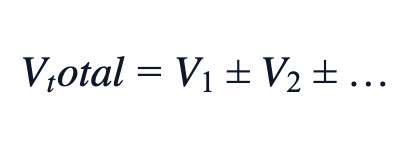
Key formulas
Name the pieces
Split the object into cone + hemisphere, prism − cylinder, and so on. Sketch the split even if the exam diagram is already drawn.
Example
Hemisphere of radius 3 on top of a cone with r=3, h=4. V = (2/3)π27 + (1/3)π9×4 = 18π + 12π = 30π.
Shared face
When joining solids, do not double-count a face into volume — volume has no overlapping interior if they only share a face.
Worked example
Worked example
Problem. An ice-cream consists of a hemisphere of radius 3 cm on a cone of radius 3 cm and height 4 cm. Find the total volume in terms of π.
Solution. Hemisphere: (2/3)π × 27 = 18π. Cone: (1/3)π × 9 × 4 = 12π. Total = 30π cm³.
Hole
A drilled block is box volume minus cylinder volume.
Review quiz
Hemisphere r=6 on cone r=6, h=9. Total volume is:
Practice questions
- Cube side 10 with a cylindrical hole radius 2 through it, height 10. Find remaining volume in terms of π.
- Describe how you would split a silo made of cylinder + hemisphere.
Study notes
Do units stay consistent?
Convert everything to cm or m before adding.
More in Spatial Geometry
- Pyramid volume: identify the base and perpendicular height
- Distance from a point to a plane using volume
- Finding the angle between a line and a plane
- Writing the equation of a plane in 3D
- Cylinder volume and curved surface area
- Cone volume when slant height is given
- Prism volume from a cross-section
- Sphere volume without the fear of π