Vector addition as a parallelogram
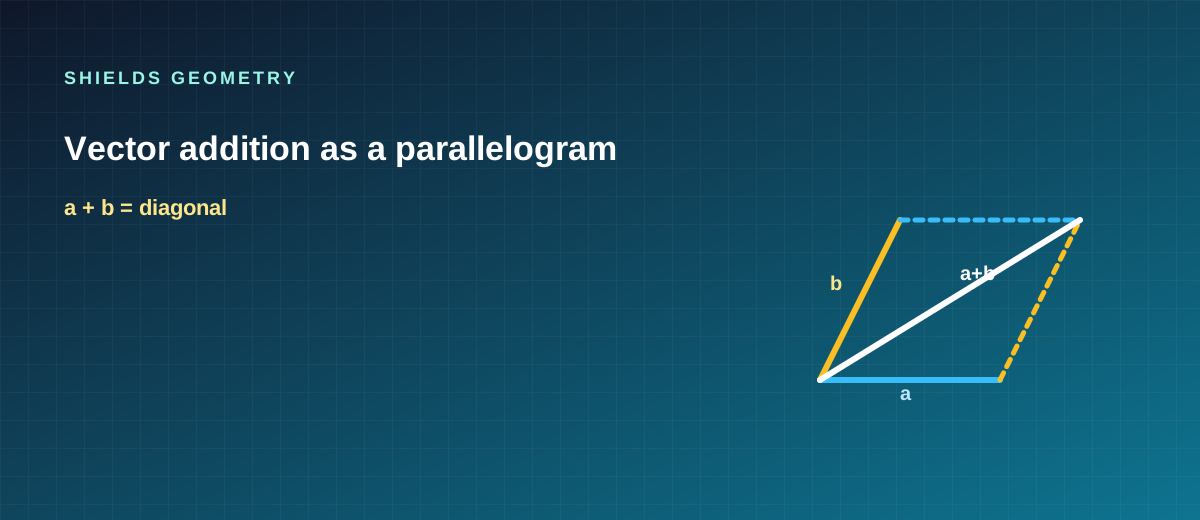
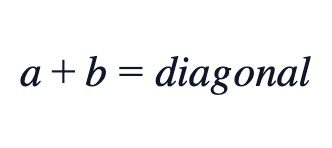
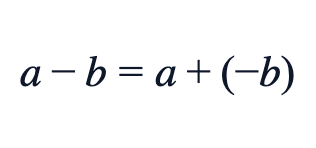
a + b completes the parallelogram; subtraction a − b points from the tip of b to the tip of a.
Key formulas
Tip-to-tail
Draw a, then from its tip draw b. The resultant runs from the start of a to the end of b.
Components
(3,1)+(−1,4)=(2,5). Same result as the parallelogram rule.
Geometry proofs
Midpoints and parallelograms are often cleaner in vectors than in pure coordinates.
Worked example
Worked example
Problem. Find a + b if a = (3, 1) and b = (−1, 4).
Solution. a + b = (3−1, 1+4) = (2, 5).
Zero
a+(−a)=0, the zero vector.
Review quiz
(6,−2)+(−4,5) equals:
Practice questions
- Add (6,−2) and (−4,5).
- Explain tip-to-tail with a sketch description.
Study notes
Is addition commutative?
Yes — a+b=b+a for vectors.